What Is a Pictorial Interest Inventory and How Does It Help Career Exploration?
Finding the right career path can feel overwhelming, especially when traditional tests bombard you with long, dense paragraphs of text. If you are looking for an instant, user-friendly way to discover your career strengths, a pictorial interest inventory offers a refreshing alternative by transforming complex job descriptions into clear, intuitive images. This guide will walk you through how visual assessments demystify the classic Holland Code framework, who benefits most from them, and how you can combine visual insights with standard tools to build your ideal career trajectory. By learning to navigate these creative resources, you can unlock a deeper level of self-awareness and take the first step toward a more fulfilling vocational future by exploring a free standard RIASEC test to establish your personal occupational blueprint.
Decoding the Pictorial Interest Inventory: What It Is and How It Works
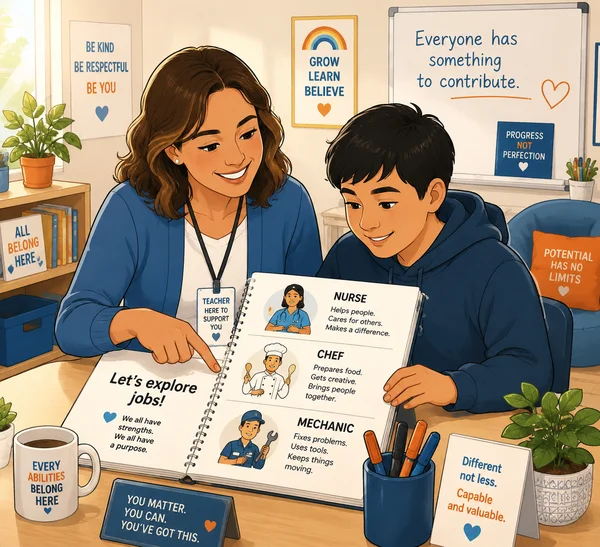
A pictorial interest inventory is a specialized career assessment tool that uses illustrations, photographs, or drawings instead of written sentences to gauge your occupational preferences. While standard questionnaires ask you to rate statements like "I like to repair automobile engines," a visual inventory simply shows you an image of someone performing that task. You then react to the image based on how much the activity appeals to you.
From Text to Images: The Mechanics of Visual Career Mapping
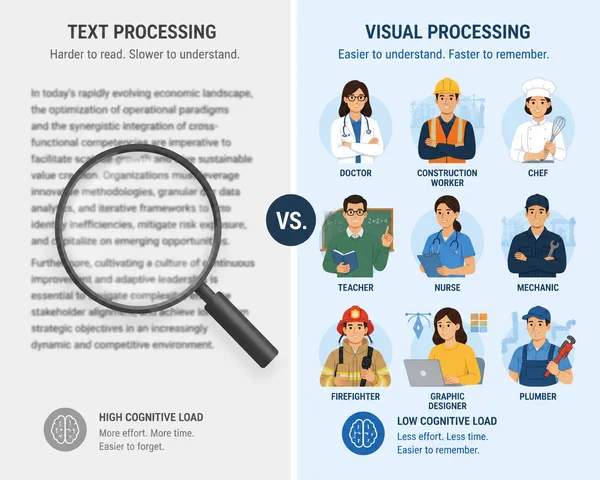
The basic science behind this approach relies on immediate psychological response. When you look at a picture, your brain processes the visual data much faster than it would process written text. You do not have to mentally define unfamiliar words or interpret the tone of a sentence. Instead, you look at a scene—such as a person testing water samples in a lab or designing a digital graphic—and decide if that environment feels comfortable or exciting to you.
Most visual inventories organize these images into pairs or small groups. You might look at three distinct pictures at once and choose the activity you like the most and the one you like the least. This forced-choice method reveals your natural patterns of interest without forcing you to slog through pages of repetitive survey questions.
Overcoming Reading and Cognitive Barriers in Vocational Surveys
Traditional career quizzes often create unintended obstacles. If a survey uses complex terminology, an individual might rate an activity lowly simply because they did not fully understand what the job title meant. For example, a phrase like "coordinating logistical supply chains" can sound intimidating, whereas a picture of someone organizing goods in a well-structured modern fulfillment center makes the concept instantly accessible. By replacing technical jargon with clear visual scenarios, a pictorial career interest inventory removes the reading barrier entirely. This ensures that the final results accurately reflect your genuine vocational interests rather than your reading comprehension level.
Visual vs. Text-Based: How a Pictorial Version Differs from a Standard RIASEC Test
Both visual and traditional text-based assessments are designed to help you achieve long-term career clarity, but they guide you through the process using entirely different cognitive mechanisms. Understanding these differences can help you determine which format matches your current situation.
Reducing Assessment Fatigue in Career Exploration
Assessment fatigue is a real problem in career counseling. When an individual faces a standard text survey containing up to one hundred items, their attention often wanders halfway through the process. They might start picking answers randomly just to finish the exercise.
In contrast, a career interest inventory pictorial version keeps your brain actively engaged. Images stimulate different neural pathways, making the assessment feel more like an interactive exploration and less like a school exam. Because the cognitive load is dramatically lower, you can complete the activity quickly without experiencing the mental exhaustion that usually accompanies long-term planning tools.
Choosing Your Path: A 3-Line Quick-Check Selection Guide
To see which framework suits your current needs, look at this quick comparative breakdown:
- Choose a Pictorial Inventory if: You experience text anxiety, are introducing career concepts to younger audiences, or prefer immediate, intuitive decision-making based on environmental scenes.
- Choose a Standard Online Test if: You want a rapid digital readout, desire automated custom career matching, or need an interactive portal to generate professional resumes immediately.
- Choose a Hybrid Approach if: You want to use visual materials to spark initial creative ideas, followed by an online validation step to capture a deep, AI-powered personality analysis.
While paper-based pictorial tests are highly effective for classroom icebreakers, online evaluations allow you to instantly map your traits. To secure immediate analytical insights, you can explore your Holland Code through our digital assessment framework to see how your intuitive preferences align with real-world industries.
Who Benefits Most from a Pictorial Career Interest Inventory?
Visual interest inventories are not just novelty items; they are essential instruments for democratic and inclusive career guidance. Certain populations find immense value in visual mapping when traditional materials fall short.
Empowering Students with Learning and Reading Disabilities
For individuals navigating dyslexia, ADHD, or language processing challenges, standard text evaluations can feel like an adversarial experience. A picture career interest inventory for students with disabilities changes this dynamic entirely. Instead of struggling to decode sentences, students can focus 100% of their energy on evaluating the actual job environment. Special education teachers frequently use these visual toolkits to build individualized education programs (IEPs), allowing students to express their true preferences independently and confidently.
Engaging Middle and High School Classrooms in Early Career Design
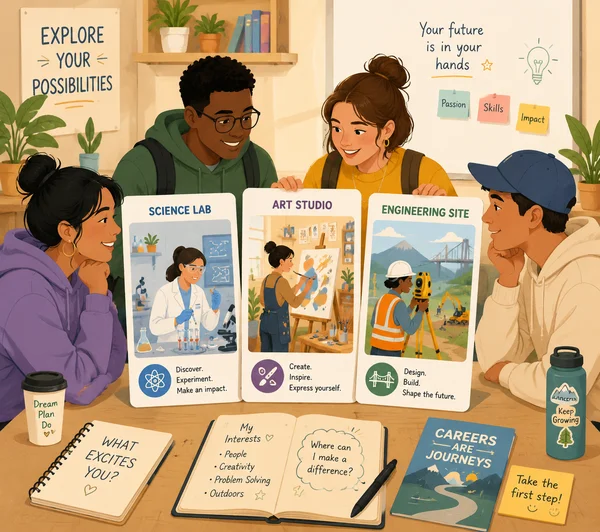
Early adolescence is an ideal time to start thinking about future possibilities, but keeping younger students engaged can be difficult. Using an interest inventory for middle school students helps educators transform quiet career classes into lively, interactive workshops.
Middle schoolers respond warmly to contemporary visual representations of modern jobs. It helps them see that the professional world extends far beyond the basic professions they see on television. High school students can also use these visual guides to brainstorm potential college majors before committing to formal educational paths.
Supporting Non-Native Speakers and Cross-Cultural Career Transitions
When people move to a new country, language fluency can lag behind professional ambition. A non-native speaker might possess world-class technical skills but struggle with the idiomatic English phrases used in standard corporate career quizzes. Visual vocational evaluation materials bridge this cultural gap seamlessly. Because universal human actions like cooking, coding, building, and teaching look similar across boundaries, pictorial surveys allow international job seekers to display their affinities without letting language barriers distort their guidance profiles.
Sourcing Formats: How to Effectively Utilize PDF Materials and Templates
If you are a teacher planning a classroom activity or an individual eager to start sketching out your professional future, you need to understand how to access and manage these unique visual resources.
Navigating Printable Visual Assessment Toolkits
Many educational foundations and state labor departments offer excellent printable materials. When you search for a free printable career interest inventory pdf, you will typically find downloadable booklets containing grids of occupational illustrations.
To use these templates effectively, you should print them out in high-resolution so that the details of each work setting remain clear. Users look through the booklet and track their choices on a separate, simplified scoring sheet. This physical interaction makes the exercise a fantastic, tactile group activity for classrooms, employment workshops, or family counseling sessions.
The Digital Trade-Off: Why Paper Templates Lack Real-Time Analytics
While a paper-based pictorial interest inventory template is incredibly useful for introductory discussions, it does possess structural limitations. Once you complete a paper survey, you must manually calculate your score to find your primary interest categories. This manual process takes time and leaves room for mathematical errors.
Furthermore, a static PDF booklet cannot update its library to show you shifting real-world job trends, nor can it provide an automated match with real-time job vacancy databases. It provides a static snapshot of your current interests, but it cannot offer the interactive, deeply personalized trajectory planning that digital tools provide.
Expanding Your Horizons: The Hybrid Approach to Career Clarity
The most effective strategy for modern career development is to combine the creative comfort of visual exploration with the analytical power of digital processing. This combined method ensures that you do not lose your initial intuitive insights while gaining access to advanced professional tools.
You can begin your journey by using physical drawings or a picture interest career survey pdf free download to lower your stress levels and stimulate open-minded brainstorming. Look at the images freely and write down the environments that make you feel energized. Do you find yourself drawn to physical, outdoor settings, or do you prefer images of collaborative corporate boardrooms?
Once you have identified your basic visual preferences, you can easily validate your patterns by transferring your attention to an agile, data-backed digital environment. By using an online tool, you can check your intuitive feelings against a structured database. Our digital platform is built specifically to serve as an educational, non-pressured self-reflection system. To discover your true vocational tendencies, you can try a comprehensive Holland Code test online today and unlock a highly detailed analysis of your natural operational style.
Aligning Your Natural Visual Affinities with Long-Term Career Paths
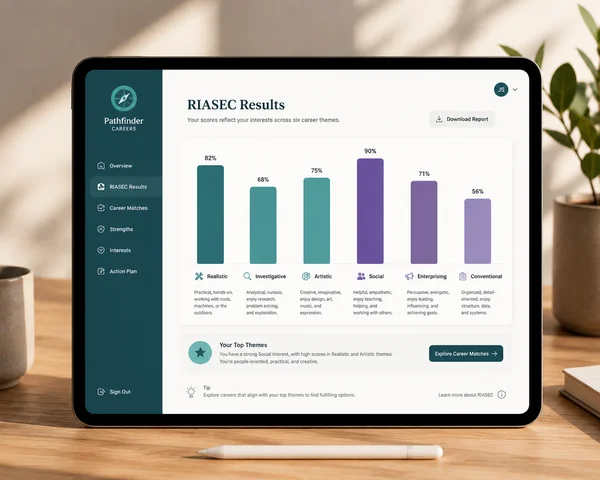
Taking charge of your professional future is an ongoing journey of self-discovery, and using visual tools is an excellent way to start that process. Whether you interact with a paper pictorial interest inventory or a digital questionnaire, the ultimate goal remains the same: to gain an authentic understanding of your natural talents, interests, and motivations. Knowing your primary vocational inclinations helps you navigate big life transitions—such as selecting a college major, applying for an apprenticeship, or changing industries mid-career—with absolute confidence.
Always remember that interest assessments are designed to expand your horizons, not to restrict your choices or place you into an immutable box. Your unique personality cannot be entirely summarized by a single test score, and your professional interests will naturally mature as you collect life experiences. Use these insights as a reliable compass to guide your career conversations with mentors, family members, or human resource professionals.
Important Informational Note: Self-exploration assessments are highly effective tools for personal growth and educational planning. However, these materials are intended purely for informational and educational purposes. They do not constitute formal psychological evaluations or clinical diagnostic advice. If you are facing complex workplace challenges, profound career anxiety, or require specialized accommodations, consider sharing your assessment results with a qualified career advisor or a certified professional counselor.
Frequently Asked Questions
Is there a free pictorial interest inventory available online?
Fully interactive online pictorial versions are relatively rare because licensing high-quality occupational artwork requires significant development capital. However, many state educational agencies offer excellent, free printable PDF booklets that you can download instantly to complete a visual evaluation manually at home.
Can a pictorial career quiz be used for professional ATS resume building?
A pictorial quiz is fantastic for initial brainstorming, but it cannot generate the digital text files required to pass automated hiring systems. To build an ATS-friendly resume, you should take your 3-letter Holland Code and input it into an interactive digital builder that formats your transferable skills automatically.
How often do my vocational interest patterns change?
Core vocational interests generally stabilize during late adolescence and early adulthood, meaning your primary interest types will likely remain consistent. However, your secondary choices can shift over time as you learn new skills, adapt to different working environments, or experience major life changes.
What is the best way to explain Holland Code results to young students?
When discussing results with younger students, avoid using heavy corporate language or complex academic terms. Instead, describe the categories using actionable themes—such as describing the Realistic type as "The Builders," the Investigative type as "The Thinkers," and the Artistic type as "The Creators"—to make the concepts memorable.