Career Assessment Inventory (CAI) vs RIASEC: Key Differences
If you searched career assessment inventory, you might feel stuck between two different things: a specific instrument called the Career Assessment Inventory (CAI) and the broader idea of career questionnaires in general. This guide explains how CAI compares with RIASEC (Holland Codes), what each one can realistically tell you, and how to choose based on your current stage. You’ll also get a one-minute decision path, a practical next-steps checklist, and common red flags to avoid. If you want a low-pressure starting point as you read, you can explore our RIASEC test online and use it as an educational way to organize your interests—not a final answer.
What Is Career Assessment Inventory (CAI)?
What CAI Measures In Plain English
A career assessment inventory like CAI is meant to summarize interest patterns and preferences. It often helps you put words to what you enjoy, what you avoid, and what kinds of work settings may feel more natural.
In practice, this can reduce “option overload.” You stop scrolling endless lists and start testing a smaller set of directions.
Common Settings: Schools, Counseling, Planning
CAI is often offered through schools or career counseling programs, which is why queries like career assessment inventory for high school students show up so often. If you have access and support to interpret results, that structure can be helpful.
If you don’t have access, you can still do solid exploration with a clear framework like RIASEC plus a plan for small experiments.
How To Use Results Without Treating Them As A Verdict
Use CAI results as a starting map, not a label. A helpful follow-up question is: what would I try next to see if this fits in real life?
Also, be cautious about treating one result as permanent. Interests can shift when your environment changes or you learn new skills.
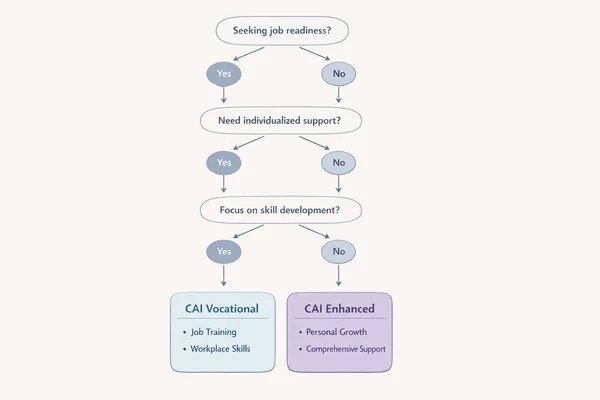
Which CAI Version Fits Your Stage: Vocational Or Enhanced
If you see career assessment inventory vocational version or career assessment inventory enhanced version, the key is matching the version to your decision. You’re not choosing “best.” You’re choosing “best fit for right now.”
Vocational Version: When Near-Term Pathways Matter
The career assessment inventory vocational version is often used when the goal is near-term planning. It can fit students considering trade or technical routes, or anyone who wants practical next steps soon.
This tends to work well when you need clarity for immediate choices, like programs, certifications, or entry-level job paths.
Enhanced Version: When Broader Options Matter
The career assessment inventory enhanced version is often framed for broader exploration, such as choosing a major or comparing several career clusters before narrowing.
It can be a better match when you want “big picture” direction first, then take smaller steps to validate it.
Decision Factors: Goals, Support, Time, Context
Instead of asking which version is better, ask:
- What decision am I making in the next 30–90 days?
- Do I have someone to help interpret results if I need it?
- Do I want broad exploration, or near-term direction?
- Will I use results to plan actions, not just read a report?
What Is RIASEC, And What Does A Holland Code Tell You
RIASEC Types In Plain Language
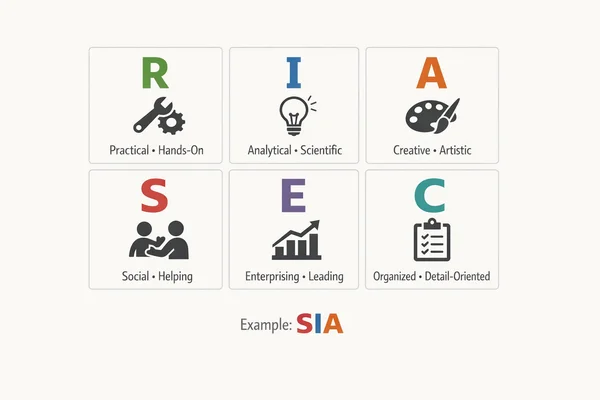
RIASEC groups interests into six themes: Realistic, Investigative, Artistic, Social, Enterprising, and Conventional. Most people are a blend, not a single type.
For a career interest inventory for students, RIASEC can be especially useful because it’s simple to understand and easy to apply.
What Is A Three-Letter Holland Code?
A three-letter Holland Code summarizes your top themes, such as SIA or CRE. The first letter usually matters most, and the next letters add detail. Your code suggests clusters to explore, not one job you must choose.
A good way to read a code is: “These are the environments and tasks I’m more likely to enjoy.”
How To Read Close Scores Without Overinterpreting
If your top scores are close together, it often means you have multiple real directions. In that case, treat your results as a shortlist and run a few small experiments before narrowing.
Close scores are common. They’re not a problem. They’re information.
CAI vs RIASEC: What Are The Key Practical Differences
Are CAI And RIASEC Actually Measuring The Same Thing?
They overlap, but they’re not the same. CAI is typically discussed as a specific career assessment inventory instrument. RIASEC is a framework that many tools use to describe interest patterns.
So, you’re often comparing a structured tool to a structured model. That’s why the “better” choice depends on your context.
Differences By Purpose, Output, And Access
In practice, CAI is often paired with a structured report and guided interpretation. RIASEC often gives you a Holland Code you can use right away as an exploration map.
Access also differs. You may get CAI through a school or counselor. You can explore RIASEC through self-guided tools and reflection.
Can You Combine CAI And RIASEC, And Which Should Come First?
Yes. If you have both available, a practical order is:
- start with RIASEC to get a clear interest map,
- use CAI for deeper structure and planning,
- translate both into real-world exploration steps.
If you’re not sure where to begin, starting with RIASEC is usually lower friction. It also gives you language to discuss interests with a teacher, parent, or counselor.
Which One Should You Use First: A 1-Minute Decision Path
If You’re In High School
If you’re searching career assessment inventory for high school students, start with your next decision: classes, training, or career exploration. Use RIASEC as a low-pressure starting point, then use a formal career assessment inventory, if offered, for a deeper guided conversation.
If You’re Choosing A Major
Use RIASEC to narrow to a few clusters. Then test them with intro classes, club projects, or short assignments. A career assessment inventory can help if it leads to a plan, not just a report.
If You’re Changing Careers
Start with RIASEC to build a shortlist. Next, validate with low-risk experiments: informational conversations, short projects, or entry-level tasks. If CAI is available, use it to add structure to your transition plan.
If You’re Advising Someone Else
Focus on language and next steps. Use results to support conversations and exploration, not to label someone or lock them into a path.
What Should You Do After Results
A career assessment inventory becomes useful when it changes what you do next. Use this checklist whether you used CAI, RIASEC, or another tool.
Turn Results Into A Shortlist (2–5 Options)
Pick 2–5 options that match your pattern. For each option, write one sentence:
- I want to test this by trying ____.
Keep it simple. The goal is movement, not perfection.
Run Low-Risk Tests: Classes, Projects, Shadowing
Choose one small experiment per option:
- a beginner class or workshop
- a weekend mini-project
- a short shadowing session
- a conversation with someone in the role
Track Evidence: What Energized You, What Drained You
After each experiment, note:
- what felt easy to start
- what held your attention
- what you avoided or delayed
This turns a career assessment inventory into a learning loop.

Are Free Career Tests Really Free
People search free alongside career assessment inventory terms because they want clarity and trust. That’s reasonable, and you deserve straightforward expectations.
Typical Models: Free Summary vs Optional Deep Report
Many sites offer a free overview, plus an optional deep report. That’s not automatically good or bad. What matters is whether the tool explains its limits and helps you plan next steps.
What To Look For: Transparency, Limits, Privacy
A trustworthy tool explains what it measures, avoids guarantees, and stays clear about privacy. It should help you explore, not pressure you.
Red Flags: Guarantees, Instant Certainty, Pressure
Be cautious with claims like guaranteed perfect match or 100% accurate results. Career exploration is a process, and any career assessment inventory should support that process.
How Can You Explore Your Interests Safely With A RIASEC Tool
Why Self-Reflection Is The Next Step
Even a strong career assessment inventory can’t make your decision for you. It can, however, help you organize your options and test ideas faster. That’s why the best next step is usually a tool-plus-action approach: get a pattern, then run small tests.
If you want a low-pressure starting point, you can try our RIASEC online test as an educational self-reflection tool. It’s designed to help you organize your interests and generate options. It does not diagnose anything. It also can’t guarantee outcomes. Think of it as a structured way to begin exploring.
What You’ll Discover Without Promises
A RIASEC tool can help you identify your top themes and see a Holland Code pattern. From there, you can create a short list to explore, then validate it with real experiences.
How To Use Your Holland Code As An Exploration Map
A simple flow:
- pick 2–3 career clusters that match your code,
- choose one small real-world test for each cluster,
- track what you learn,
- adjust your shortlist.
If you want, you can start by using a RIASEC test results explained view to translate your code into practical exploration ideas.
Next Steps After Comparing CAI And RIASEC
If you searched career assessment inventory, the main goal is clarity you can act on. Use CAI when you want a structured instrument and you have access and support. Use RIASEC when you want a fast interest map you can start applying today. When you can, use both: start broad with RIASEC, then deepen with a career assessment inventory approach.
If you feel stuck, overwhelmed, or the decision feels high-stakes, talking with a counselor, educator, or mentor can add support and perspective.
Frequently Asked Questions
What is the career assessment inventory?
A career assessment inventory is a structured questionnaire that helps you explore patterns in interests and preferences. In some contexts, the term also points to the specific CAI instrument. Either way, the best use is to treat results as a starting point for exploration, then validate with small real-world tests.
What is a career inventory test?
A career inventory test is a type of career assessment inventory focused on interests and preferences. It can help you generate options and plan next steps. It can’t guarantee a perfect match or replace real-world experience, so pair it with experiments like classes, projects, or informational conversations.
What’s the difference between CAI vocational version and enhanced version?
The career assessment inventory vocational version is often used for near-term, practical pathway planning. The career assessment inventory enhanced version is usually framed for broader exploration, such as choosing a major or comparing several clusters before narrowing. If you’re unsure, choose based on the decision you need to make soonest.
What is RIASEC and how does it relate to Holland Codes?
RIASEC is a framework that groups interests into six themes. A Holland Code is often a three-letter summary of your top themes. Many tools use RIASEC because it’s easy to interpret and apply to career exploration.
What does it mean if my top RIASEC scores are close together?
Close top scores are common. They often mean you have more than one realistic direction. In that case, pick two or three options and run small experiments before you narrow, then use what you learn to update your plan.
Are CAI and RIASEC the same thing, or do they serve different purposes?
They serve different purposes. CAI is typically discussed as a specific career assessment inventory instrument with a structured report. RIASEC is a framework that describes interest patterns and produces a Holland Code. They can complement each other when you translate both into practical next steps.
What are the limitations of career interest inventories?
Career interest inventories can’t predict your future or guarantee a perfect fit. They also can’t account for every real-world constraint, like location, finances, or family responsibilities. They work best as one input in a broader exploration process that includes real experiences.
When should I talk to a counselor or educator about my results?
Consider support if you feel stuck, overwhelmed, or unsure how to turn results into action. It can also help if you’re making a high-stakes decision and want a structured conversation about options. A counselor or educator can help you connect your career assessment inventory results to practical next steps and resources.